Frequently Asked Questions
The most-asked questions about capital cities of africa.
What does 'capital cities of Africa' refer to as a whole subject?
It encompasses the 54 national capitals of Africa's recognized sovereign states, each serving as the political and administrative heart of its country. Together they form a cross-section of governance systems, architectural traditions, and cultural identities spanning the entire continent.
How many capital cities are there in Africa?
There are 54, matching one-to-one with the internationally recognized independent nations on the continent. Each one anchors a distinct government, though a handful also double as continental diplomatic hubs.
Which African capital is the most populous?
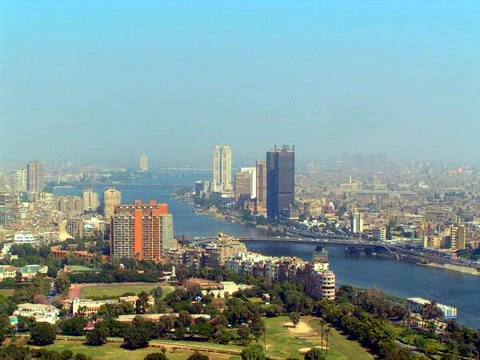
Cairo, Egypt, tops the list with a metropolitan population well above ten million. It is also one of the oldest major urban centers on Earth, with continuous habitation stretching back more than five millennia.
Where should a newcomer begin exploring African capitals?
Starting with widely known hubs such as Cairo, Addis Ababa, and Nairobi builds a solid foundation in the continent's political geography. Branching outward to smaller or less-visited capitals like Mbabane, Moroni, or N'Djamena then reveals the full range of the group.
Which capital sits at the highest elevation?
Addis Ababa, Ethiopia, rests at roughly 2,355 meters above sea level, making it the highest national capital in Africa. Its cool highland climate distinguishes it sharply from many lower-lying coastal capitals elsewhere on the continent.
What are some notable capital-city relocations in African history?
Nigeria moved its capital from Lagos to the purpose-built city of Abuja in 1991 to create a more centrally located seat of government. Tanzania similarly shifted from Dar es Salaam to Dodoma in the 1970s for geographic and developmental reasons.
What languages do African capital cities operate in?
The 54 capitals collectively use dozens of official languages, including French, English, Portuguese, Arabic, Amharic, and Swahili among others. This multilingual landscape mirrors the continent's layered colonial and pre-colonial histories.
Which African capital has the deepest historical roots?
Cairo and its ancient predecessor Memphis trace urban settlement back over 5,000 years, placing them among the oldest continuously inhabited cities on the planet. Carthage in Tunisia also carries roots to roughly the 9th century BCE, adding another layer of ancient depth to the group.
What role do capitals play in pan-African identity?
Cities like Addis Ababa (home to the African Union headquarters) and Abuja (seat of the African Development Bank) function as continental diplomatic centers beyond their national roles. They host summits, cultural festivals, and institutions that weave the 54 nations into a shared political framework.
What makes African capitals distinct from capitals on other continents?
They reflect a uniquely layered history of indigenous kingdoms, colonial administration, and post-independence nation-building, often visible in the mix of architectural styles within a single city. Many also sit near extraordinary natural environments, from the savannas surrounding Dodoma to the coral reefs off the coast of Moroni.