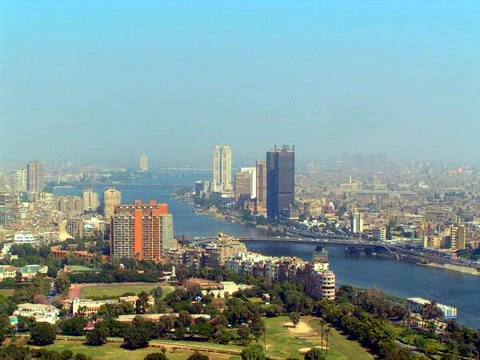
Abidjan
Largest city and economic capital of Ivory Coast.

Abidjan is the largest city and former capital of Ivory Coast, serving as the country's economic hub. It is characterized by high levels of industrialization and urbanization and remains a cultural crossroads of the region.
- country
- Ivory Coast
- population_2021
- 6.3 million
- status
- Largest city and economic capital
- official_language
- French
- notable_feature
- Most populous French-speaking city in West Africa
Lore & Background
According to oral tradition of the Tchaman people, the name 'Abidjan' resulted from a misunderstanding. An old man carrying branches met a European explorer who asked the name of the nearest village; the man, terrified, fled shouting 'min-chan m'bidjan' (Ebrié for 'I just cut the leaves'), which the explorer recorded as Abidjan. A slightly different version states the man replied 'M'bi min djan' ('I've just been cutting leaves'). Abidjan was originally a small Atchan fishing village.
Reader's Guide
Abidjan's significance lies in its role as the economic and cultural center of Ivory Coast, a position it has held since colonial times. After independence, it experienced rapid population growth and urban expansion, with new districts like Cocody emerging. Its legacy is that of a major West African metropolis that has weathered political and economic challenges while remaining the country's primary economic engine.
Did You Know?
- Abidjan's name reportedly originated from a misunderstanding when a local man, asked for the village name, replied 'min-chan m'bidjan' ('I just cut the leaves').
A Name Born from Misunderstanding
According to oral tradition preserved by the Tchaman people and recorded in the Encyclopedic Dictionary of Côte d'Ivoire, the city's name traces back to a simple linguistic accident. An elderly man, carrying freshly cut branches to patch his roof, encountered a European explorer who asked for the name of the nearest settlement. The old man, not sharing the explorer's language, interpreted the question as a demand to justify his presence. Startled, he bolted while shouting "min-chan m'bidjan" — an Ebrié phrase meaning "I just cut the leaves." The explorer, convinced he had received a proper answer, jotted down the locale as Abidjan. A shorter variant of the tale has the colonist hearing "M'bi min djan," or "I've just been cutting leaves." Before this fateful miscommunication, the site was merely a small Atchan fishing village.
Forged by Infrastructure and Empire
Abidjan's transformation from a modest settlement into a major colonial city was driven by a cascade of infrastructure decisions. The city was laid out on a rigid grid, with Le Plateau reserved for European settlers and the northern districts for the colonized, the two zones divided by the Gallieni Military Barracks. Under the Colonial Pact, the port served as the conduit connecting raw-material-producing hinterlands to French industrial centers.
Africa's Sixth-Size Metropolis and Economic Heart
It is also the most populous French-speaking city in West Africa. All foreign embassies and numerous political institutions remain headquartered there. By the late 1950s, the city had grown into the financial center of West Africa, a position that directly challenged the long-standing dominance of Dakar. The Abidjan Autonomous District, encompassing the city and surrounding suburbs, is one of fourteen administrative districts in the nation. Its high levels of industrialization and urbanization mark it as a defining engine of the Ivorian economy.
A Mosaic of Neighborhoods and Cultures
Abidjan's identity is woven from layers of migration, trade, and cultural exchange. The Lebanese community, growing in importance from the early 1900s, became a prime channel for distributing colonial products to the European hinterland, embedding a commercial diaspora into the city's fabric. As a cultural crossroads of West Africa, Abidjan blends Ebrié, Tchaman, French, and Lebanese influences into a distinctly urban identity that continues to evolve.
Frequently Asked Questions
What is Abidjan?
Abidjan is the largest city in Ivory Coast and the nation's economic capital. With roughly 6.3 million residents as of 2021, it stands as the most populous French-speaking city in all of West Africa.
Is Abidjan the official capital of Ivory Coast?
Not quite—Abidjan held the title of capital in the past but now serves as the economic seat of government. The political capital is located elsewhere, yet Abidjan remains the country's biggest city and commercial engine.
What role does Abidjan play in Ivory Coast?
The city drives the bulk of the country's industrial output and urban economic activity, making it the center of trade and manufacturing. It also functions as a cultural meeting point where traditions from across the region blend together.
Why is Abidjan important in the broader African context?
As the most populous Francophone city in West Africa, Abidjan anchors regional commerce and cross-border trade. Its position as Ivory Coast's economic capital gives it a disproportionate influence on the wider West African economy.
What language do people speak in Abidjan?
French is the official language used in government, education, and business throughout the city. This makes Abidjan a major hub for Francophone culture and professional life in the region.
More in Capital Cities Of Africa 1-16
Spotted an error? Know more?
This is a living reference — every entry is fact-audited, and reader corrections feed straight into our audit queue. Suggest an edit · See this site's audit record