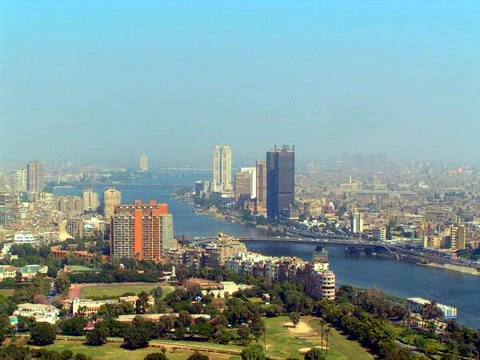
Dar es Salaam
Largest city and financial hub of Tanzania on the Swahili coast.

Dar es Salaam is the largest city and financial hub of Tanzania, located on the Swahili coast. Founded in the mid-19th century, it served as the main administrative and commercial centre of German East Africa, Tanganyika, and Tanzania, and remains a major economic centre and one of the fastest-growing cities in the world.
- Founded
- mid-19th century
- Population
- over 7 million
- Country
- Tanzania
- Region
- Dar es Salaam Region
- Former capital of
- German East Africa, Tanganyika, Tanzania
- Districts
- Kinondoni, Ilala, Ubungo, Temeke, Kigamboni
Lore & Background
Dar es Salaam was founded in the mid-19th century, originally a coastal fishing village called Mzizima. Its growth accelerated with the construction of the Central Railway Line in the early 1900s. German East Africa became British Tanganyika Territory, and Dar es Salaam remained the administrative and commercial centre. Under British indirect rule, European and African areas developed separately, and a large number of workers from British India arrived. After World War II, the city experienced rapid growth. By the 2000s, businesses, construction, and the stock exchange expanded, and the port became prominent for entrepot trade.
Reader's Guide
Dar es Salaam is significant as Tanzania's most prominent city for arts, fashion, media, film, television, and finance. It remains the capital of the Dar es Salaam Region and consists of five districts. The city's port is a key hub for landlocked countries including Rwanda, Burundi, Zambia, and the eastern Democratic Republic of the Congo. Joseph's Cathedral reflect its colonial past. Its legacy includes a blend of Swahili, German, British, and Indian influences, and it continues to serve as the de facto administrative centre despite the official capital relocation to Dodoma.
Did You Know?
- Dar es Salaam was originally a coastal fishing village called Mzizima, Swahili for 'healthy town'.
- The city's name comes from Arabic 'Dār as-Salām', meaning 'Abode of Peace'.
Historical Origins & Colonial Legacy
The Port of Dar es Salaam is so central to the city's identity that the urban settlement essentially grew around it. His untimely death, however, buried the ambition, and the project lay dormant for more than two decades. After the First World War, British administrators inherited Tanganyika and kept the city as their capital, and economic activity surged through the early twentieth century and World War II, all funneling through the harbor. When Tanganyika achieved independence, the city retained its status as the commercial heart of the nation, and the port remained the undisputed engine of that role.
Gateway for Landlocked Nations
The political upheaval of apartheid-era South Africa inadvertently reshaped East African trade routes. Landlocked neighbors—Zambia, Zimbabwe, and Malawi—had long depended on South African harbors, but racial segregation policies and political tensions forced them to redirect their commerce through the Indian Ocean coast of Tanzania. This shift catalyzed the construction of the TAZARA Railway, the TANZAM highway, and the Malawi corridor link, all of which channeled goods into Dar es Salaam. The port became the critical exit point for Zambian copper and Malawian tobacco, while simultaneously serving as a lifeline for fuel imports destined for those inland economies. In the early 1990s, the closure of Mozambique's Beira and Nacala ports during the civil war further intensified Malawi's dependence on the Dar es Salaam route. Today, roughly 35 percent of all cargo transiting the harbor is foreign-owned, and the Tanzania Ports Authority issues licenses to neighboring governments so they can operate their own dedicated cargo centers within the port, streamlining clearance and cutting costs for their respective trade flows.
Modern Operations & the DP World Concession
Yet this growth came with growing scrutiny: critics pointed to chronic inefficiencies and corruption, and international pressure mounted for reform. Early results, as reported by Tanzanian authorities, included noticeably shorter vessel waiting times and a measurable increase in container throughput. The concession represents the most significant operational overhaul in the port's post-independence history, positioning it to compete more effectively with Durban, Mombasa, and Maputo along the Indian Ocean coast.
Expansion & Foreign Cargo Infrastructure
In the same month, a foundation stone was laid for a $20 million inland port facility, extending the port's reach into the Tanzanian interior. The foreign cargo center model is another pillar of this infrastructure. Meanwhile, the Malawi Cargo Center, established in the early 1990s, maintains dedicated warehouses and dry ports in Dar es Salaam and Mbeya, with its primary revenue stream being fuel shipments loaded onto TAZARA wagons and trucked through the Kyela Border into Malawi.
Frequently Asked Questions
Who is Dar es Salaam?
Dar es Salaam is Tanzania's largest city and its primary financial center, situated along the Swahili coast. It currently supports a population exceeding seven million people within the Dar es Salaam Region.
What is Dar es Salaam's role in the overall story?
The city has long served as the principal seat of government and commerce, having held that position for German East Africa, Tanganyika, and independent Tanzania. It continues to anchor the nation's economic activity as a major commercial hub.
When does Dar es Salaam's origin story begin?
The settlement was established in the mid-1800s, making it a comparatively young urban center. Its trajectory accelerated sharply once it became the administrative and trade focal point of the region.
What districts make up Dar es Salaam?
The city is organized into five districts: Kinondoni, Ilala, Ubungo, Temeke, and Kigamboni. Kigamboni sits on the peninsula across the channel from the mainland core.
Why is Dar es Salaam such a fan-favorite entry?
As one of the fastest-growing cities on the planet and the financial heart of East Africa, it consistently ranks among the most influential urban centers in the canon. Its layered history spanning colonial and post-colonial eras gives it a depth that keeps readers coming back.
More in Capital Cities Of Africa 1-16
Spotted an error? Know more?
This is a living reference — every entry is fact-audited, and reader corrections feed straight into our audit queue. Suggest an edit · See this site's audit record