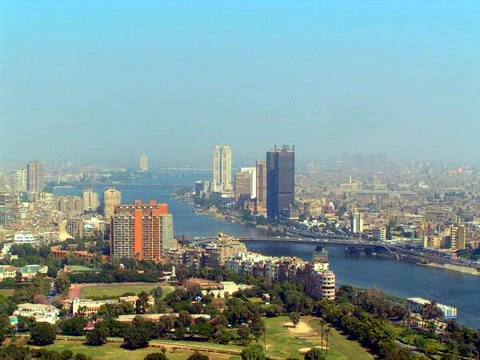
Conakry
Capital and largest city of Guinea, a major port and cultural hub.

Conakry is the capital and largest city of Guinea, serving as the nation's economic, financial, and cultural center. A port city originally settled on Tombo Island, it later expanded onto the Kaloum Peninsula and has grown to house over 3.4 million people, roughly one-fifth of Guinea's population.
- country
- Guinea
- area_type
- Special Zone and Region
- major_languages
- Susu, French, Fula
Lore & Background
Conakry was originally settled on the small Tombo Island and later spread to the neighboring Kaloum Peninsula. The city's small land area and relative isolation from the mainland have created infrastructural burdens since independence. Camp Boiro, a feared concentration camp during the rule of Sekou Touré, was located in Conakry.
Reader's Guide
Conakry is Guinea's administrative, communications, and economic center, with its economy revolving around the port, through which alumina and bananas are shipped. Manufactures include food products, cement, metal products, and fuel products. Conakry is served by Conakry International Airport and contains key institutions such as Gamal Abdel Nasser University, the Grand Mosque, and the Roman Catholic Cathédrale Sainte-Marie. Its population makes it more than eight times larger than Guinea's second city, Kankan.
Did You Know?
- Conakry was originally settled on Tombo Island and later spread to the Kaloum Peninsula, a 36-kilometer-long stretch of land.
- Camp Boiro, a concentration camp during Sekou Touré's rule, was located in Conakry.
From Island Villages to Colonial Port
The construction of a railway linking the port to Kankan opened the interior to large-scale groundnut shipments, transforming the modest outpost into a thriving commercial centre. The city then expanded from its island origins onto the neighboring Kaloum Peninsula—a narrow strip of land stretching 36 kilometers but only 0.2 to 6 kilometers wide—eventually consuming the entire peninsula as urban growth pushed northeastward. What the colonial planners regarded as a strategic advantage, the compact and defensible geography, would later become a persistent constraint on the city's development.
A Population Boom on a Narrow Peninsula
This extraordinary growth has been compressed onto the Kaloum Peninsula, a landmass only 0.2 to 6 kilometers wide, creating an infrastructural burden the colonial-era founders never anticipated. The city's relative isolation from the mainland, once a defensive asset, now limits room for expansion. Despite this administrative proliferation, the physical footprint remains the same narrow peninsula.
An Extreme Tropical Monsoon Climate
Conakry sits under a tropical monsoon climate (Köppen Am) that produces one of the most dramatic seasonal contrasts in West Africa. The dry season, governed by the harmattan wind from December through April, is genuinely arid: January and February each receive a mere 1 millimetre of rain on average, and sunshine peaks in March. Then the wet season arrives with almost violent intensity. August, paradoxically, is the least sunny month of the year, while the harmattan months deliver the most.
A City Marked by Political Violence
Conakry's political history is scarred by several episodes of extreme violence. They attacked the city, liberated 26 Portuguese prisoners of war held by the PAIGC, and then withdrew, having failed to overthrow the government or eliminate the PAIGC leadership. Decades later, during the authoritarian rule of Ahmed Sékou Touré, the city was home to Camp Boiro, a concentration camp that became a symbol of state terror.
Frequently Asked Questions
What is Conakry?
Conakry is the capital and most populous city of Guinea, functioning as the country's primary administrative seat. It is organized as both a Special Zone and a Region within the nation's territorial structure.
What role does Conakry play in Guinea?
The city anchors Guinea's economy, finance, and cultural life, operating as the nation's chief port and commercial hub. Its strategic position on the Atlantic coast makes it the main gateway for trade and international connections.
How did Conakry grow from a small settlement into a major city?
Originally established on Tombo Island, the settlement gradually expanded across the Kaloum Peninsula as the population surged. Today it is home to roughly 3.4 million residents, about one-fifth of all Guineans.
What languages are spoken in Conakry?
French serves as the official administrative language, while Susu and Fula are widely used in everyday life. This multilingual mix reflects the diverse ethnic communities that make up the city's population.
Why is Conakry important to the broader region of West Africa?
As Guinea's dominant port and economic engine, Conakry channels trade and investment for the entire country. Its size and infrastructure make it a key urban center in the West African coastal corridor.
More in Capital Cities Of Africa 1-16
Spotted an error? Know more?
This is a living reference — every entry is fact-audited, and reader corrections feed straight into our audit queue. Suggest an edit · See this site's audit record