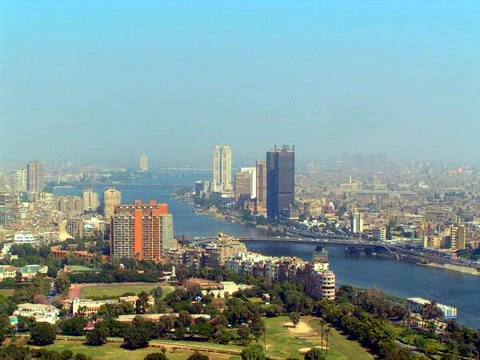
Addis Ababa
Capital of Ethiopia, political heart of Africa.

Addis Ababa is the capital and largest city of Ethiopia, officially founded in 1887 after settlement began in 1886 at a site chosen by Empress Taytu Betul. It is one of the largest cities in Africa, with a UN-estimated population of about 5.2 million as of 2025, and at an elevation of 2,355 meters (7,726 ft), it is typically ranked as the fifth- or sixth-highest capital city in the world and the highest in Africa. Known as 'the political capital of Africa,' it hosts the headquarters of the African Union and the United Nations Economic Commission for Africa. The city lies within the Ethiopian Rift Valley, part of the East African Rift system, and is surrounded by the Special Zone of Oromia.
- Population (2025 est.)
- 5,200,000 (UN estimate)
Verified Timeline
Lore & Background
The founding history of Addis Ababa dates to 1886, when settlement began in the valley south of Mount Entoto at a place called Finfinne, a name referring to the presence of hot springs. Empress Taytu Betul chose the site, building a house for herself near the 'Filwuha' hot mineral springs, where she and members of the Shewan Royal Court liked to take mineral baths. She persuaded Emperor Menelik II to move the capital from cold and windy Entoto to the plains below and named the new city Addis Ababa. By the next year, large plots of land (Amharic: ሰፈር, sefer) had been allocated to the major nobility, other important personages, and some churches. The local Oromo tribes had their lands confiscated and many were displaced. The city was originally founded as a katama (royal camp), with the sefer laid out mirroring an army on the march. The Imperial Palace of Menelik was in the centre, bracketed on each side by the leaders of the left (Qeñazmach) and right (Grazmach) wings of the army. Menelik II formed his imperial palace in 1887, and Addis Ababa became the empire's capital in 1889, subsequently leading to the opening of international embassies. Urban development began with the 20th century, without any prior planning. A wide-scale economic boom occurred in the 1920s, with an increase in stone houses filled with imported European furniture, newly manufactured automobiles, and expanded banking institutions. The total register of automobiles was 76 in 1926 and went to 578 in 1930.
Reader's Guide
Addis Ababa's significance stems from its role as the political and diplomatic hub of Africa, hosting the African Union and the United Nations Economic Commission for Africa. It is a federally-chartered city in accordance with the Addis Ababa City Government Charter Proclamation No. 87/1997 in the FDRE Constitution. The city is populated by people from different regions of Ethiopia and is home to Addis Ababa University. It has a high human development index and is known for its vibrant culture, strong fashion scene, high civic and political involvement of younger people, a thriving arts scene, and for being the heart of a country with one of the fastest economic growth rates in the world. A study based on DNA evidence from almost 1,000 people around the world suggests that early humans first traveled out of Africa via a place close to Addis Ababa, spreading from the region to the rest of the planet some time around 100,000 years ago. The research indicated that genetic diversity decreases steadily the further one's ancestors traveled from Addis Ababa. Mount Entoto, a high tableland to the north of current Addis Ababa, is one of a handful of sites put forward as a possible location for a medieval imperial capital known as Barara, a permanent fortified city established during the early to mid-15th century that served as the main residence of several successive emperors up to the early 16th-century reign of Libne Dengel. The city was depicted on a map drawn by the Italian cartographer Fra Mauro around 1450, and it was razed and plundered by Ahmad ibn Ibrahim in 1529. The suggestion that Barara was located on Mount Entoto is supported by the recent discovery of a large medieval town overlooking Addis Ababa, dubbed the Pentagon, a 30-hectare site incorporating a castle with 12 towers and 520 meters of stone walls, estimated to have had a population exceeding 160,000 people.
Did You Know?
- Addis Ababa is the highest capital in Africa at an elevation of 2,355 meters (7,726 ft).
- The city was originally named by Empress Taytu Betul, meaning 'new flower' in Amharic.
- A DNA study hypothesizes that early humans first traveled out of Africa via a migration route from the Horn of Africa around 100,000 years ago.
- The medieval capital Barara, possibly located on Mount Entoto, is sometimes speculated to have had a large population, though its size is not well established by mainstream historical scholarship.
- The total number of registered automobiles in Addis Ababa went from 76 in 1926 to 578 in 1930.
Frequently Asked Questions
What is Addis Ababa?
Addis Ababa is the capital and largest city of Ethiopia, with a population of roughly 5.2 million as of 2025. It sits at about 2,355 meters above sea level, making it the highest capital city on the African continent.
Why is Addis Ababa called the 'political capital of Africa'?
The city houses the headquarters of both the African Union and the United Nations Economic Commission for Africa, concentrating the continent's intergovernmental diplomacy and policy-making in one place.
How was Addis Ababa founded?
The site was chosen in 1886 by Empress Taytu Betul, and the settlement was officially established the following year in 1887. Its name, meaning 'new flower,' reflects its origin as a deliberately planned new city.
Where does Addis Ababa rank in elevation among world capitals?
At roughly 7,726 feet (2,355 m) above sea level, it is generally listed as the fifth- or sixth-highest capital in the world and is the highest of any capital in Africa.
Why does Addis Ababa matter beyond Ethiopia?
By hosting the African Union and UN ECA headquarters, it functions as the continent's institutional and diplomatic nerve center. Few other cities combine a national capital role with that level of pan-African governance infrastructure.
More in Capital Cities Of Africa 1-16
Spotted an error? Know more?
This is a living reference — every entry is fact-audited, and reader corrections feed straight into our audit queue. Suggest an edit · See this site's audit record