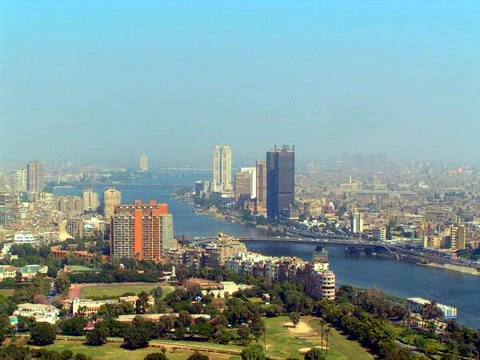
Bangui
Capital and largest city of the Central African Republic.

It serves as the nation's administrative, trade, and commercial center, housing the National Assembly, government buildings, banks, embassies, and the University of Bangui.
- Country
- Central African Republic
- Language
- French (official), Sango
- Notable Landmarks
- Notre-Dame Cathedral, University of Bangui, Ngaragba Central Prison
Lore & Background
It was located in the upper reaches of the French Congo, and its name derives from the Bobangi word for the rapids beside the settlement, which marked the end of navigable water north from Brazzaville. Archaeological studies in and around Bangui have uncovered at least 26 ancient Iron Age sites, including the Pendere-Sengue site near Independence Avenue, where iron tools, pottery, and a 9-kilogram iron spatula were found.
Reader's Guide
Despite its challenges, Bangui remains the primary hub for trade, manufacturing (textiles, beer, shoes, soap), and international diplomacy in the region.
Did You Know?
- The city's name comes from the Bobangi word for the rapids located beside the settlement.
- Archaeological sites near Bangui include the Pendere-Sengue site, where a 9-kilogram iron spatula was unearthed.
From French Outpost to Colonial Capital
The settlement's name derives directly from that river, which itself takes its name from the Bobangi word for the rapids that sit beside the town—rapids that marked the northern limit of navigable water from Brazzaville. The original site sat roughly ten kilometres south of those rapids. What began as a modest station in the upper reaches of the French Congo gradually grew in strategic importance because the rapids cut off direct river communication with upstream posts at les Abiras and Fort de Possel.
Iron Age Roots Beneath the Modern City
Long before European boots touched the soil, the area around Bangui was a centre of metallurgical activity. Archaeological investigations have identified at least twenty-six ancient Iron Age sites in and around the city, each yielding metallurgical tools and objects that illuminate a pre-colonial past stretching back millennia. The closest of these to the modern city is Pendere-Sengue, situated just eight hundred metres from Independence Avenue. There, researchers and conservation agencies have uncovered several thousand ceramic shards, iron tools, pottery fragments, and a remarkable iron spatula weighing nine kilograms. When its dating is compared with analogous sites in Nigeria and Sudan, Pendere-Sengue may date as far back as the ninth century BC.
A Stage for Political Storms
Bangui has served as the stage for some of the Central African Republic's most dramatic political upheavals. French media reported she had been his mistress and that he was responsible for her murder; in response, Bokassa banned French newspapers and seized control of the Agence France-Presse office in the city. By the mid-1980s, eighty percent of national revenue was consumed by staff salaries.
Administrative and Economic Heart of the Republic
Today Bangui functions as the administrative, trade, and commercial nerve centre of the Central African Republic. The majority of the country's population is concentrated in the western region, with the city and its surroundings forming the demographic core. The city houses the National Assembly, government buildings, banks, foreign enterprises, embassies, hospitals, hotels, main markets, and the Ngaragba Central Prison. Its industrial output includes textiles, food products, beer, shoes, and soap. International connectivity is maintained through Bangui M'Poko International Airport, linking the capital to the wider world.
Frequently Asked Questions
What is Bangui?
Bangui is the capital and largest city of the Central African Republic, functioning as the country's primary hub for administration, trade, and commerce.
What role does Bangui play in the Central African Republic?
It acts as the nation's administrative and commercial heart, housing the National Assembly, government offices, banks, foreign embassies, and the University of Bangui.
What languages are spoken in Bangui?
French serves as the official language, while Sango is also widely used in everyday life across the city.
What notable landmarks can fans find in Bangui?
Key sites include the Notre-Dame Cathedral, the University of Bangui, and the Ngaragba Central Prison, each marking a distinct facet of the city's identity.
Why is Bangui important in the context of African capitals?
As the seat of the Central African Republic's government and its largest urban center, Bangui concentrates the country's legislative, educational, and diplomatic activity in one place.
More in Capital Cities Of Africa 1-16
Spotted an error? Know more?
This is a living reference — every entry is fact-audited, and reader corrections feed straight into our audit queue. Suggest an edit · See this site's audit record