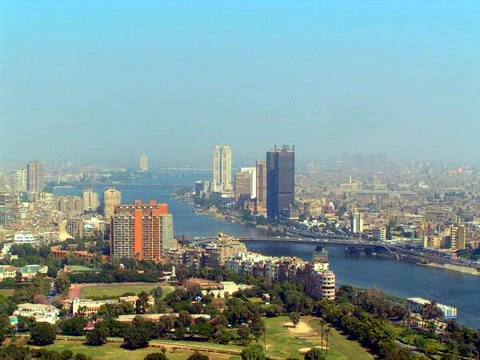
Antananarivo

- Founder
- Merina King Andrianjaka
- Country
- Madagascar
- Metropolitan population
- approaching three million
- Former name
- Analamanga
Reader's Guide
Today, it is managed by the Commune Urbaine d'Antananarivo (CUA), which faces challenges of overcrowding, traffic, waste management, and pollution due to explosive population growth. Major landmarks include the reconstructed royal palaces, Andafiavaratra Palace, Tsimbazaza Zoo, Mahamasina Stadium, and Lake Anosy.
Did You Know?
- The city was originally called Analamanga, meaning 'Blue Forest,' before being renamed by King Andriamasinavalona.
- All eighteen Malagasy ethnic groups, as well as residents of Chinese, Indian, European, and other origins, are represented in the city.
Founding and the Birth of a Royal Capital
The story of Antananarivo begins on a hill in Madagascar's central highlands, where a community known as the Vazimba — regarded as the island's earliest inhabitants — had established a settlement called Analamanga, a name that translates to "Blue Forest" in the local Central Highlands dialect. He declared the hill his capital and began constructing a rova, a fortified royal compound that would gradually grow into the sprawling palace complex of the Kingdom of Imerina. According to oral tradition, Andrianjaka stationed a garrison of one thousand soldiers to hold the position. The name has stuck ever since, even as the settlement evolved from a single hilltop village into one of the most significant urban centers in the Indian Ocean region.
From Civil War to a Unified Island
For the next seventy-seven years, the eastern district's seat at Ambohimanga grew in power while the city endured a prolonged period of internal conflict. His conquests also drew neighboring ethnic groups under Merina authority. His son, Radama I, pushed the kingdom's reach to cover more than two-thirds of the island, earning recognition from European diplomats as effectively the King of Madagascar.
A Modern Metropolis in the High Country
The city is home to all eighteen recognized Malagasy ethnic groups alongside communities of Chinese, Indian, European, and other backgrounds, with the Merina people still forming the majority. As the seat of the Presidency, National Assembly, Senate, and Supreme Court, it also hosts twenty-one diplomatic missions and the regional headquarters of numerous national and international businesses and NGOs. No other city on the island matches its concentration of universities, nightlife venues, art spaces, and medical facilities. The championship-winning Makis rugby team calls the city home. Yet the Commune Urbaine d'Antananarivo, the body tasked with local governance, has struggled with chronic underfunding and mismanagement as it tries to keep pace with the city's explosive growth in areas ranging from waste collection and traffic to water supply and public security.
Living Heritage and Sacred Grounds
The city's landscape is layered with centuries of royal and spiritual significance. The reconstructed royal palaces on the hilltop, the Andafiavaratra Palace, and the tomb of Rainiharo anchor a tradition that stretches back to the Merina kings. Outside the old town gate stands Andohalo, the public square where every successive sovereign once addressed the populace with royal proclamations. The surrounding countryside still features vast irrigated paddy fields, the largest of which is called Betsimitatatra, built generations ago through fanampoana, a system of statute labor that fed the growing capital. The old social order left its mark too: Andriamasinavalona carved out specific territories for hova commoners and each andriana noble subcaste, and fady, or taboos, forbade non-nobles from building wooden houses or allowing swine within the city walls. Today, visitors can also explore the Tsimbazaza Zoo, Mahamasina Stadium, Lake Anosy, four 19th-century martyr churches, and the Museum of Art and Archaeology, each a window into the city's layered past.
Frequently Asked Questions
Who founded Antananarivo?
The city's origins trace back to the Merina King Andrianjaka, who established a fortified hilltop settlement in the 17th century. That founding event is widely regarded as the seed from which Madagascar's political center grew.
What was Antananarivo called before its current name?
The settlement was previously known as Analamanga before it received the name Antananarivo. The older designation still echoes in the surrounding region's identity.
How big is Antananarivo's metropolitan population?
The metro area is approaching three million residents, making it the dominant urban cluster on the island by a wide margin.
Why is Antananarivo important to Madagascar?
It functions as the seat of government, the primary economic engine, and the cultural heart of the nation. Its central-highlands hilltop position has anchored Malagasy political life for centuries.
Which country does Antananarivo serve as the capital of?
Antananarivo is the capital of Madagascar, the island nation located off the southeastern coast of Africa.
More in Capital Cities Of Africa 1-16
Spotted an error? Know more?
This is a living reference — every entry is fact-audited, and reader corrections feed straight into our audit queue. Suggest an edit · See this site's audit record